Not only SQL but also ….

nosql_440

Keeping with the theme of Big Data, as we spoke a couple of days back , the concept of N=all suddenly started to give rise to a whole slew of new challenges – that which is an obvious consequence of dealing with such large chunks of data. Storage and retrieval! The ability to quickly retrieve, analyze and correlate data to derive information becomes essential when it comes to dealing with big data. And for such massive amounts of data, relational databases do not seem to jive all that well. One of the major reasons for this is the fact that relational (although I may now safely call it, the traditional) databases require a structure to the data that it can store. Now when you are trying to correlate between the users’ location data Vs the local deals (as an example) and add on the users’ personal credit card usage, the data does not always fall into a structured pattern for it to be stored in a relational database. Along came NoSQL . The name was borrowed from the 1998 open source RDMS developed by Carlo Strozzi, and was later popularized by Eric Evans of Rackspace.

Unlike SQL or any of the other traditional databases, noSQL can be viewed more as a collective term for a variety of new data storage backends, with the concept of transactions taken out of it. With its eternally loose definitions, a noSQL can possibly aggregate data from rows that span across multiple tables in a traditional relational database. Now this obviously results in enormous chunks of data posing storage challenges. However with the costs associated with storage decreasing rapidly, this can be ignored when compared to the potential that you now have. Couchbase , one of those companies that have caught on quickly to this new revolution in data storage and retrieval with its document-oriented database technology, outlines an interesting article on why noSQL .

They are not the only ones that have grown into this new idea. Hadoop , is yet another one of those, that has quickly become a new household name. Developed and sustained by a group of unpaid volunteers, Hadoop is a framework to process large data sets, perhaps know as big data. Rumored to have been spun off as a free implementation of Google MapReduce , several big names have built services and solutions around this framework, some of the notable ones being Amazon Web Services (AWS), VMWare Hadoop Virtual Extensions (HVE), IBM BigInsights.

Yet another database that has been gaining popularity off late is MongoDB – a project spun off by 10Gen . Like Couchbase, this is also a document-oriented database and has started to pick up several implementations including SAP, MTV and Sourceforge.

With an “unstructured” database comes the challenges of querying it. Mongo uses a skewed version of JSON (known as BSON or Binary JSON) for representing queries whereas Couchbase has adopted a SQL-like query language that is slowly becoming a standard world wide, known as unQL (Unstructured Query Language).

While all these are still in the nascent stages of development, as the big data wave is rapidly approaching it peak, let me leave you with a slide deck from the QCon London 2013 presented by Matt Asay, VP of Corporate Strategy at 10gen on the “Past, Present and Future of noSQL.
Digitizing the cash counters

square-20100511-600

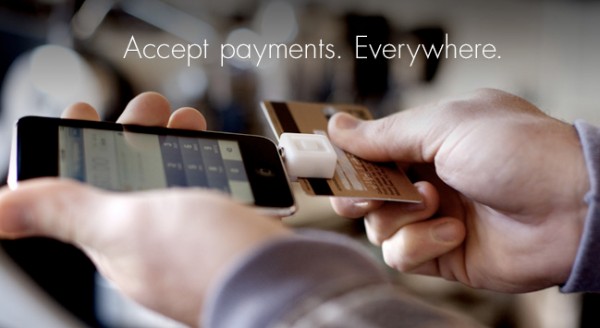
I’m sure the image that you see above has become quite a familiar sight across America. Apple stores have been flaunting a similar version for quite a while now, which almost resembles the Mophie . I first noticed this at Conshohocken Cafe , a quaint little breakfast place at Conshohocken, PA. Square , as they call it, they started to make money through the 2.75% transaction fee charged per swipe. Now my post was not particularly to about the Square, but instead, the Square Stand , that was announced today. At $299 a piece and a $499 iPad, this can replace the traditional cash registers in a blink of an eye. Sounds quite simple, as we start to see more and more dependency on the mobile device .

But wait, there is more. The exact same day, Paypal decides to announce its revolutionary product know as the Cash for Register . With a free credit/debit/paypal processing for the rest of the year for any qualifying US Business, we now have a competition!

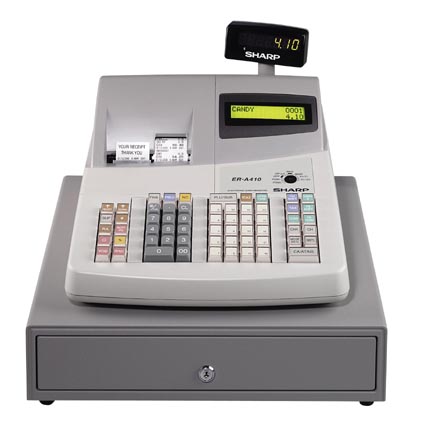
The era of cash registers which opens up a “slot machine” of quarters and pennies is slowly disappearing. Whether its paypal or square, the digital revolution has spared none. Soon the traditional cash registers will just be a piece of antique in the museum!

era410

The new library of Alexandria – the power of Big Data

all-you-need-to-know-about-big-data

A term that has been gaining substantial amount of curiosity in the recent past and perhaps one that would keep growing in importance as the era of Internet and the information flow starts to become more widely available, is Big Data. Although the word has been ringing all around me and my place of work for quite sometime, what really triggered my interest are two books that I am currently alternating between – “ The long Tail by Chris Anderson , a book that describes how endless choice is creating unlimited demand, and Big Data by Viktor Mayer Schonberger and Kenneth Cukier, a book that sets forth to describe the concept that would revolutionize the way we live and think.

Wikipedia defines big data as

a collection of data sets so large and complex that it becomes difficult to process using on-hand database management tools or traditional data processing applications

But perhaps a more fitting definition is one that is described in the book “Big Data” – a large set of data derived from a sample size N where

N=all

. The reason I find the latter more befitting is because, data sets do not always have to be big as long as it encompasses the entire world. For e.g. the book describes a study done on the corruption in Sumo Wrestling in Japan . The study collected data from almost 65,000 matches across 7 years in Japan to find a correlation. The data in this case was not as big as one would imagine it to be. But the fact that it “surveyed” the entire set of matches across those 7 years, rather than limiting itself to certain samples from those, made me lean towards calling it a “big data”.

Big data changes the fundamental aspect of life by giving it a quantitative dimension

says Viktor and Kenneth in their book. Humans have long tried to quantify several aspects of human behavior in order to gain insights to perform predictive analysis. Now one of the terms that I used in my previous paragraph is of interesting relevance – “survey”. Surveys perhaps were one such primitive form of gathering relevant data. One of the major challenges of a survey was the fact that your sample size is now N < all, which means that you now have the data associated with the population that actually took your survey. The results then become biased to the characteristics of that limited population, which does not neccessarily portray the entirety. As this problem started to evolve, statisticians found that the results were perhaps more accurate if the sample set of the population was chose at random, rather than just increasing the sample size. Studies have shown that extrapolating the survey done on a random sample set yield a more accurate results as compared to a large sample size across a specific set of the population. Now this still does not solve one of the challenges that I'd like to call as active polling vs passive polling. In almost all cases, a survey deals with the study of a specific set of questions answered by a specific group of people or simply put, a survey is an active polling. To truly understand a human behavior, this would prove to be inaccurate especially because when answering a question, humans tend to stop and think. THis can be quite analogous to studying the human nature when interacting with a group of people, by having a tutor or a professor in the group. The mere awareness of a study being conducted could potentially skew the behavior. Whereas, if the same group of people can be "passively" observed, the information gathered can be closer to being accurate. The same can be told about any methods of predictive analysis. Big Data analysis methodologies in my view prove to be far more passive in its ways of polling data and hence tend to lean more towards being accurate.

In the coming weeks, as I wander through the world of Big Data, I plan to post more examples and insights into this amazing field that has been gaining significant relevance in today's world. I plan to talk about one aspect in each of my posts so as to limit yet another challenge of big data, known as information overload! But that does not entirely solve the problem. My plan is also to engage more interaction among my reader to gain more information, as I meander through. Feel free to enthral me with your comments.

Project Mighty and Napoleon – Adobe version of stylus and ruler

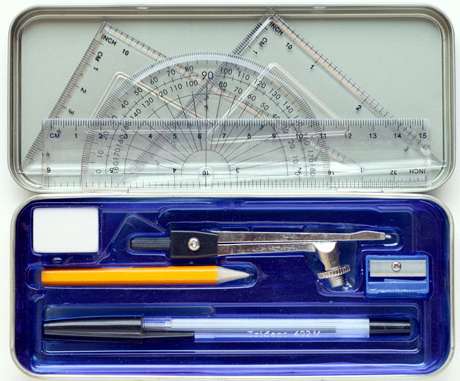
Does anyone remember the ancient geometry box – the one that was a common sight in middle and high schools, back in the 80s and 90s? If not, here is something that could spark those memory cells.

tin-geometry

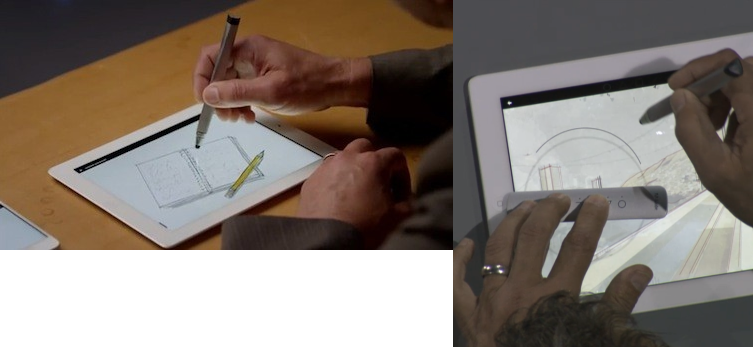
Now, fast forward to 2013 and to Adobe’s MAX Conference 2013 held this week at Los Angeles. Although the focus was mainly on the cloud offering of their wonderfully successful creative suite, something interesting sneaked in at the tad end – a project they called Projects Mighty and Napoleon . The names don’t reveal much, just as the website does not. But the concept talked about a stylus and a ruler (!!!). The idea is to let those creative elite to now use their iPads effectively; to connect directly to the cloud and to apps such as TypeKit and Kuler . Again, not much revealed, but these images do show some potential.

Project Mighty

Exactly how much the stylus would be useful outside the Adobe suite of apps is yet unknown. Having been a long time proponent of a “stylus-like tool for iPad, esp. while taking notes during meetings, this does come as a welcome delight. And of course, this could possibly change the way geometry is taught in schools!

Crazy little thing called “glass”

google-glass

The hype has been immense. Wearable gadgets have slowly started to turn into the new fashion statement. Soon carrying a smartphone in your pocket might no longer be enough for a common man!

In fact, the idea of a wearable gadget started long ago when Pranav Mistry introduced his concept back in 2009. For those who haven’t had a chance to watch the presentation, it sure is a must see.

It soon started to evolve. Although not quite in the way Pranav had envisioned yet, we started to see and hear rumors about multiple flavors of what can be classified as a wearable gadget. Soon bands such as the Jawbone Up and Nike Fuelband started to crop up, gaining a significant market share amongst the exercising consumer community. So did the rumors of smart watches .

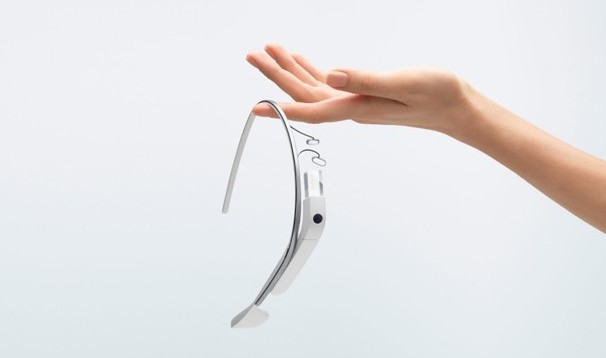
And then came the Google Glass . Ever since the revolution of the search, Google has been trying to play the game of catch up, right from its gmail service, through android and smartphones to social networking. And finally, they seemed to have found a product line that could possibly be called unique! Built on its ever evolving Android platform, it does provide a possibility of a rather near-seamless integration with the smartphones, while in “transition”. And on April 27th 2013, they quietly released the source code to developers.

Needless to say, the plethora of applications that ran on smartphones, started to send out rumors of their “glass” versions. Twitter perhaps was one of the first to jump onto the band wagon with NY Times in a close second. There was then the announcement of apps such as Evernote, Skitch and Path which google demo-ed at the SXSW 2013 .

The possibilities are limitless. And perhaps one day the eyeglass industry would be transformed as much as the watch industry would soon be. In the meantime, let me leave you with Tim Stevens as he chronicles his days with the Google Glass!

The quest for an ultimate “smartwatch”

iwatch-concept-slap-bracelet

There was a time when the watch industry was ruled by the Casios and the Seikos, with occasional luxury watches such as Rolex and Omega emerging as a distant dream. With the emergence of cell phones, their charm started to fade away. Time being more accurate on a cell phone, the menace of changing time manually when traversing across different latitudes started to be seen as tedious. And the smartphone market killed it all. Watches started to fade away from the phase of the earth, occasionally revealing itself on the wrists of the richer elite.

Along came iPod Nano, the VI in 2010. Although it failed to impress as a music player, simply due to it’s surprisingly small touch screen and its slightly bulky form factor. But the square shape and the watch dials that it offered quickly sparked the creative minds of the geek world. And they soon built a watch strap around it. And I, for my own biased reasons, quickly jumped on the concept and bought myself one. I must say I have not been terribly disappointed so far.

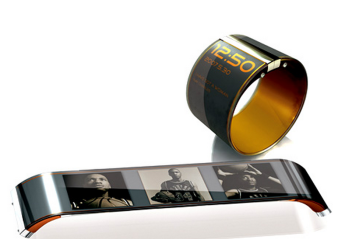
Although the iWatch aka ipod nano did not kick off as much, the concept of a “smart” watch slowly started to emerge. Need I say, the gadget elite such as Apple, Google, And Samsung quickly jumped into the race for the ultimate smartwatch. And soon enough, prototypes and concept mockups started to mushroom at different parts of the web world.

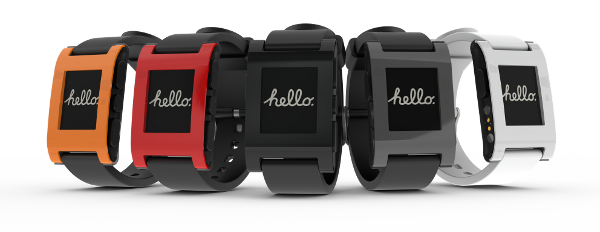
Hype has been unimaginably high. Yet, so far there has been just one decent contender and surprisingly it is not one of those gadget giants. Instead it was a startup known as Pebble Technology that has taken the giant leap.

pebble-watch-5-colors-w

Built with an impressive SDK for the developers and a seamless integration with Android and iOS, Pebble comes at a unbeatable $150 price tag along with the alert features from a smartphone. Now, anything that Apple hints at is no longer a secret. And along came the rumors of a secret apple team working on an iWatch . Soon enough, Samsung announced that they are making a smart watch too!! Google did not want to be left behind as well, and they announced the Google Time .

At this point, I must make a mention about Microsoft SPOT Watch , announced back in 2003, launched in 2004 and withdrawn in 2008. And as always, Microsoft decided to play the catch up, by announcing its own smartwatch, 2 days back .

The future is promising. Just like the Phablets , the watch industry is no longer confined to the Rolex and the Casios and the Omegas. And for a person like me, who prefers to wear a watch regardless of the umpteen time gadgets around, this is a welcome change. Let me leave you with one of the concept videos amongst the hundreds that are floating around, that impressed me.

As always your thoughts are welcome ……

The era of Phablets

Phablet

Some call it the phablet revolution. And some say it is just a natural progression. Yet Apple famously came out with the thumb ad to not jump into the band wagon. Agreed, Samsung Galaxy Note did seem a little weird while talking. But so did bluetooth earphones… All it took was a few days of getting used to the new form factor.

The “unofficial” definition of Phablets goes like this – a class of smartphones with screen sizes ranging between 5 and 8 inches and designed to combine or straddle the functionalities of a smartphone and tablet. Dell Streak 5 was then identified as the first, although it was commercially unsuccessful. It was not until Samsung Galaxy Note was introduced in the Fall of 2011, the real meaning of the word and its associated concept started to take shape. And within a year, the world became a changed place. The 2013 Mobile World Congress held in barcelona between 25th and 28th Feb, was indeed a playground for all phablet aspirers. With a plethora of models and concepts , it truly stole the show!

So where do you think this could go? Tech Trader Daily writes, according to a reports by the wireless and mobile analysts at Barclay Capital, Phablets are sweeping the globe .

I, for my own personal bias have not yet made the brave move to switch from an Apple product to one of those phablets. But I’m sure as the year progresses, I just might be tempted to change my bias, unless Apple decides to enter the revolution!

Gesture Technology – Pointgrab

Point grab

I spoke about touch screen walls sometime back here. Although still in its formative years, using Microsoft Kinect and a household projector, presentations suddenly became a lot more “magical”! Taking it a step further, PointGrab recently introduced the Hand Gesture Recognition Software (HGRS) using a standard 2D camera. Based in Israel, Pointgrab introduced two new mobile (encompassing both tablets and smartphone) apps – CamMe, for gesture based photography and PlungaShot, a gesture based bow and arrow game on February 25th 2013 at the Mobile World Congress in Barcelona . Again, it is in its nascent stages, but the possibilities are amazingly abundant. Primarily in the presentation area, this could become a game changer, with its ability to deliver presentations from a distance without a remote control or aid from a colleague.

I personally downloaded the CamMe application, both on my ipad and iphone. For long I was searching for a decent app, with the with the ability to perform time- based photography. Although a bit buggy right now, CamMe takes things even further than a timer-based methodology, to snap a picture a second after you asks it to, from a distance.

With its SDK being open to application developers, I can very well see this being picked up by the imaginative elite to develop games, customized user interfaces, what all and what not!

Think Geek item of the week

NeuroweargeotaggingiPhoneappfuturisticgadget1

From gestures we go to telepathy! NeuroSky Mindwave Mobile lets you play games with the power of your mind!

Amazon Coins – The era of virtual coins begins here (?)

amazon-coin

Imagine a world where you trade your dollars for virtual money. You keep a track of the conversion rates as you move from one site to the other. Imagine what it would be like when credit cards show you credit limits in terms of virtual money. And what if your credit card itself is virtual?

Back in 2005, Philip Rosedale, the founder and CEO of Second Life, gave an interesting interview . He said “The GNP of Second Life in September 2005 was L$906,361,808 or U.S.$3,596,674, based on the recent L/U.S. exchange rate”. Now the interesting idea there is L/US Exchange rate. The rates varied just like the conversion rates for real money.

For this same reason, when Amazon announced their “Amazon coins”, I was excited. Now obviously, with spending amazon coins also comes earning amazon coins, a free ride for app developers on Kindle. And of course the whole saga of tax revolt could soon follow.

Now if you take a step further, lets say iTunes starts to go down that path, with Apple coins and so does ebay. And if the rest of the “world” follows suit, you now have a “real” virtual world, with “developed” sites, “developing” sites and “under developed” sites. You could have virtual banks, which loan Amazon coins at a 0.9% APR and of course as you transact between sites, you could watch a daily ticker of conversion rates.

I guess I’m overthinking here. Maybe it’s an overdose of caffeine taking its effect. But Amazon coins do seem like a promising step towards a virtual economy.

Reading books – a new cost model

ereader-with-stack-of-books

The news at Gizmodo today morning, got me thinking, why do I pay for books I don’t read beyond a few pages! The latest victim was, The Last Templars, by Raymond Khoury – a book which showed an amazing promise in the beginning, with its fast pace and history, but slowly managed to drag into religion and philosophy, making me drop it right then. I almost regretted buying it. It was Amazon 1-click that has emerged as the primary culprit for such impulse buys. It has also become a common dilemma around the globe, not just for ebooks, but printed copies as well. There are two problems that I see here – what do I do with a book that I do not wish to keep after reading, and what do I do, if I do not wish to read a book completely.

I was rather amused a few months back, when I was browsing through the books at the Paradies Shop in St. Louis Airport. I picked up a book and walked over to the counter to pay for it. At the end of the whole transaction, I was given a slip which said that I could return the book after reading, to any of the listed bookstores and get 50% money back. Read and Return , they called it. So when I read about Total BooX and their concept of pay-as-you-go, it did sound intriguing. Atleast it did prompt to jump into the band wagon, and register for updates. I must admit the screenshots look rather impressive. And with the statistics that have been put forth, I must say a person like my father who loves keeping track of things, he would jump on to such a opportunity. Now how much would a page cost? That’s something we will have to wait an watch.

There is another school of thought, which advocates making eBooks free, with adwords and advertisements making up for the cost and any additional profit you expect out of it. Now finding the right balance for that would be an interesting economic problem.

Renting has been another aspect in the world of books. How can that be translated into eBooks, poses the other interesting challenge. Amazon lending Library has found quite an impressive success ever since the launch. But the fact that it is limited to kindle owners hinders its growth to an extend, although I’m sure one of these days it will make its way to the Kindle App as well. And then along came Overdrive , with an attempt to resurrect the ailing hard copy lending libraries. Its concepts such as waiting for a book to be available at the library, and automatically returning the books after the specified due date, has made it almost close to the lending library around the corner that we all are used to. But there is certainly room for growth and innovations. Combining the concepts of Collaborative Consumption along with the revolution of the social media, peer-to-peer lending of ebooks is still an untapped avenue.

Let me know what you guys think.