Project Mighty and Napoleon – Adobe version of stylus and ruler

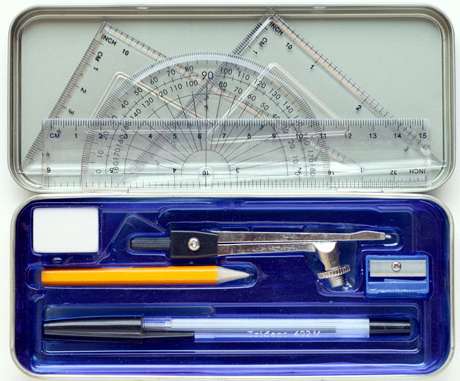
Does anyone remember the ancient geometry box – the one that was a common sight in middle and high schools, back in the 80s and 90s? If not, here is something that could spark those memory cells.

tin-geometry

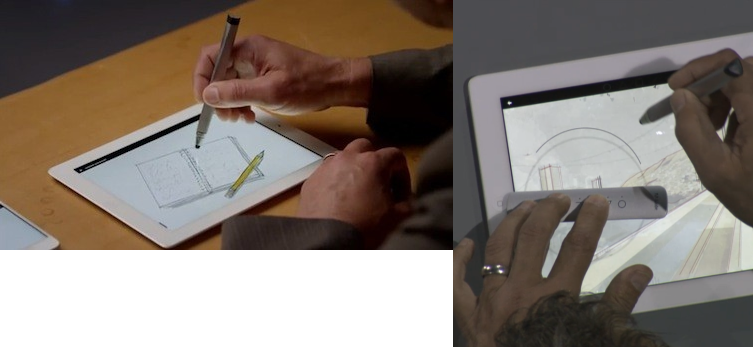
Now, fast forward to 2013 and to Adobe’s MAX Conference 2013 held this week at Los Angeles. Although the focus was mainly on the cloud offering of their wonderfully successful creative suite, something interesting sneaked in at the tad end – a project they called Projects Mighty and Napoleon . The names don’t reveal much, just as the website does not. But the concept talked about a stylus and a ruler (!!!). The idea is to let those creative elite to now use their iPads effectively; to connect directly to the cloud and to apps such as TypeKit and Kuler . Again, not much revealed, but these images do show some potential.

Project Mighty

Exactly how much the stylus would be useful outside the Adobe suite of apps is yet unknown. Having been a long time proponent of a “stylus-like tool for iPad, esp. while taking notes during meetings, this does come as a welcome delight. And of course, this could possibly change the way geometry is taught in schools!

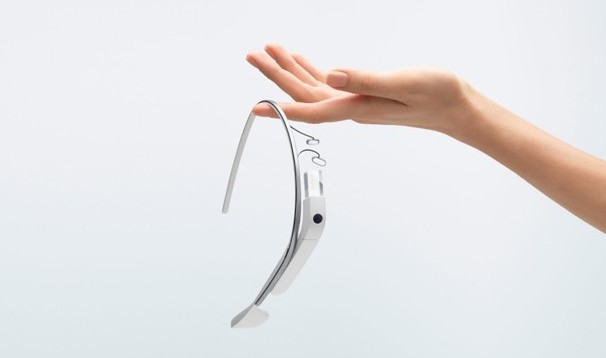
Crazy little thing called “glass”

google-glass

The hype has been immense. Wearable gadgets have slowly started to turn into the new fashion statement. Soon carrying a smartphone in your pocket might no longer be enough for a common man!

In fact, the idea of a wearable gadget started long ago when Pranav Mistry introduced his concept back in 2009. For those who haven’t had a chance to watch the presentation, it sure is a must see.

It soon started to evolve. Although not quite in the way Pranav had envisioned yet, we started to see and hear rumors about multiple flavors of what can be classified as a wearable gadget. Soon bands such as the Jawbone Up and Nike Fuelband started to crop up, gaining a significant market share amongst the exercising consumer community. So did the rumors of smart watches .

And then came the Google Glass . Ever since the revolution of the search, Google has been trying to play the game of catch up, right from its gmail service, through android and smartphones to social networking. And finally, they seemed to have found a product line that could possibly be called unique! Built on its ever evolving Android platform, it does provide a possibility of a rather near-seamless integration with the smartphones, while in “transition”. And on April 27th 2013, they quietly released the source code to developers.

Needless to say, the plethora of applications that ran on smartphones, started to send out rumors of their “glass” versions. Twitter perhaps was one of the first to jump onto the band wagon with NY Times in a close second. There was then the announcement of apps such as Evernote, Skitch and Path which google demo-ed at the SXSW 2013 .

The possibilities are limitless. And perhaps one day the eyeglass industry would be transformed as much as the watch industry would soon be. In the meantime, let me leave you with Tim Stevens as he chronicles his days with the Google Glass!

The quest for an ultimate “smartwatch”

iwatch-concept-slap-bracelet

There was a time when the watch industry was ruled by the Casios and the Seikos, with occasional luxury watches such as Rolex and Omega emerging as a distant dream. With the emergence of cell phones, their charm started to fade away. Time being more accurate on a cell phone, the menace of changing time manually when traversing across different latitudes started to be seen as tedious. And the smartphone market killed it all. Watches started to fade away from the phase of the earth, occasionally revealing itself on the wrists of the richer elite.

Along came iPod Nano, the VI in 2010. Although it failed to impress as a music player, simply due to it’s surprisingly small touch screen and its slightly bulky form factor. But the square shape and the watch dials that it offered quickly sparked the creative minds of the geek world. And they soon built a watch strap around it. And I, for my own biased reasons, quickly jumped on the concept and bought myself one. I must say I have not been terribly disappointed so far.

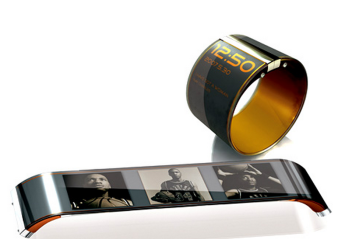
Although the iWatch aka ipod nano did not kick off as much, the concept of a “smart” watch slowly started to emerge. Need I say, the gadget elite such as Apple, Google, And Samsung quickly jumped into the race for the ultimate smartwatch. And soon enough, prototypes and concept mockups started to mushroom at different parts of the web world.

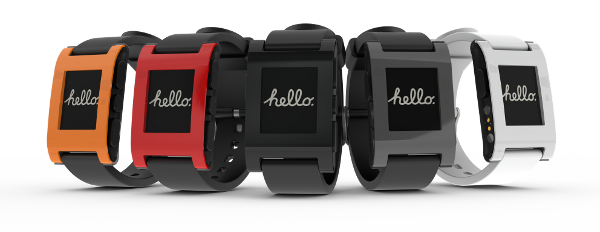
Hype has been unimaginably high. Yet, so far there has been just one decent contender and surprisingly it is not one of those gadget giants. Instead it was a startup known as Pebble Technology that has taken the giant leap.

pebble-watch-5-colors-w

Built with an impressive SDK for the developers and a seamless integration with Android and iOS, Pebble comes at a unbeatable $150 price tag along with the alert features from a smartphone. Now, anything that Apple hints at is no longer a secret. And along came the rumors of a secret apple team working on an iWatch . Soon enough, Samsung announced that they are making a smart watch too!! Google did not want to be left behind as well, and they announced the Google Time .

At this point, I must make a mention about Microsoft SPOT Watch , announced back in 2003, launched in 2004 and withdrawn in 2008. And as always, Microsoft decided to play the catch up, by announcing its own smartwatch, 2 days back .

The future is promising. Just like the Phablets , the watch industry is no longer confined to the Rolex and the Casios and the Omegas. And for a person like me, who prefers to wear a watch regardless of the umpteen time gadgets around, this is a welcome change. Let me leave you with one of the concept videos amongst the hundreds that are floating around, that impressed me.

As always your thoughts are welcome ……

The era of Phablets

Phablet

Some call it the phablet revolution. And some say it is just a natural progression. Yet Apple famously came out with the thumb ad to not jump into the band wagon. Agreed, Samsung Galaxy Note did seem a little weird while talking. But so did bluetooth earphones… All it took was a few days of getting used to the new form factor.

The “unofficial” definition of Phablets goes like this – a class of smartphones with screen sizes ranging between 5 and 8 inches and designed to combine or straddle the functionalities of a smartphone and tablet. Dell Streak 5 was then identified as the first, although it was commercially unsuccessful. It was not until Samsung Galaxy Note was introduced in the Fall of 2011, the real meaning of the word and its associated concept started to take shape. And within a year, the world became a changed place. The 2013 Mobile World Congress held in barcelona between 25th and 28th Feb, was indeed a playground for all phablet aspirers. With a plethora of models and concepts , it truly stole the show!

So where do you think this could go? Tech Trader Daily writes, according to a reports by the wireless and mobile analysts at Barclay Capital, Phablets are sweeping the globe .

I, for my own personal bias have not yet made the brave move to switch from an Apple product to one of those phablets. But I’m sure as the year progresses, I just might be tempted to change my bias, unless Apple decides to enter the revolution!

Gesture Technology – Pointgrab

Point grab

I spoke about touch screen walls sometime back here. Although still in its formative years, using Microsoft Kinect and a household projector, presentations suddenly became a lot more “magical”! Taking it a step further, PointGrab recently introduced the Hand Gesture Recognition Software (HGRS) using a standard 2D camera. Based in Israel, Pointgrab introduced two new mobile (encompassing both tablets and smartphone) apps – CamMe, for gesture based photography and PlungaShot, a gesture based bow and arrow game on February 25th 2013 at the Mobile World Congress in Barcelona . Again, it is in its nascent stages, but the possibilities are amazingly abundant. Primarily in the presentation area, this could become a game changer, with its ability to deliver presentations from a distance without a remote control or aid from a colleague.

I personally downloaded the CamMe application, both on my ipad and iphone. For long I was searching for a decent app, with the with the ability to perform time- based photography. Although a bit buggy right now, CamMe takes things even further than a timer-based methodology, to snap a picture a second after you asks it to, from a distance.

With its SDK being open to application developers, I can very well see this being picked up by the imaginative elite to develop games, customized user interfaces, what all and what not!

Think Geek item of the week

NeuroweargeotaggingiPhoneappfuturisticgadget1

From gestures we go to telepathy! NeuroSky Mindwave Mobile lets you play games with the power of your mind!

Amazon Coins – The era of virtual coins begins here (?)

amazon-coin

Imagine a world where you trade your dollars for virtual money. You keep a track of the conversion rates as you move from one site to the other. Imagine what it would be like when credit cards show you credit limits in terms of virtual money. And what if your credit card itself is virtual?

Back in 2005, Philip Rosedale, the founder and CEO of Second Life, gave an interesting interview . He said “The GNP of Second Life in September 2005 was L$906,361,808 or U.S.$3,596,674, based on the recent L/U.S. exchange rate”. Now the interesting idea there is L/US Exchange rate. The rates varied just like the conversion rates for real money.

For this same reason, when Amazon announced their “Amazon coins”, I was excited. Now obviously, with spending amazon coins also comes earning amazon coins, a free ride for app developers on Kindle. And of course the whole saga of tax revolt could soon follow.

Now if you take a step further, lets say iTunes starts to go down that path, with Apple coins and so does ebay. And if the rest of the “world” follows suit, you now have a “real” virtual world, with “developed” sites, “developing” sites and “under developed” sites. You could have virtual banks, which loan Amazon coins at a 0.9% APR and of course as you transact between sites, you could watch a daily ticker of conversion rates.

I guess I’m overthinking here. Maybe it’s an overdose of caffeine taking its effect. But Amazon coins do seem like a promising step towards a virtual economy.

Reading books – a new cost model

ereader-with-stack-of-books

The news at Gizmodo today morning, got me thinking, why do I pay for books I don’t read beyond a few pages! The latest victim was, The Last Templars, by Raymond Khoury – a book which showed an amazing promise in the beginning, with its fast pace and history, but slowly managed to drag into religion and philosophy, making me drop it right then. I almost regretted buying it. It was Amazon 1-click that has emerged as the primary culprit for such impulse buys. It has also become a common dilemma around the globe, not just for ebooks, but printed copies as well. There are two problems that I see here – what do I do with a book that I do not wish to keep after reading, and what do I do, if I do not wish to read a book completely.

I was rather amused a few months back, when I was browsing through the books at the Paradies Shop in St. Louis Airport. I picked up a book and walked over to the counter to pay for it. At the end of the whole transaction, I was given a slip which said that I could return the book after reading, to any of the listed bookstores and get 50% money back. Read and Return , they called it. So when I read about Total BooX and their concept of pay-as-you-go, it did sound intriguing. Atleast it did prompt to jump into the band wagon, and register for updates. I must admit the screenshots look rather impressive. And with the statistics that have been put forth, I must say a person like my father who loves keeping track of things, he would jump on to such a opportunity. Now how much would a page cost? That’s something we will have to wait an watch.

There is another school of thought, which advocates making eBooks free, with adwords and advertisements making up for the cost and any additional profit you expect out of it. Now finding the right balance for that would be an interesting economic problem.

Renting has been another aspect in the world of books. How can that be translated into eBooks, poses the other interesting challenge. Amazon lending Library has found quite an impressive success ever since the launch. But the fact that it is limited to kindle owners hinders its growth to an extend, although I’m sure one of these days it will make its way to the Kindle App as well. And then along came Overdrive , with an attempt to resurrect the ailing hard copy lending libraries. Its concepts such as waiting for a book to be available at the library, and automatically returning the books after the specified due date, has made it almost close to the lending library around the corner that we all are used to. But there is certainly room for growth and innovations. Combining the concepts of Collaborative Consumption along with the revolution of the social media, peer-to-peer lending of ebooks is still an untapped avenue.

Let me know what you guys think.

Second life – Is it ailing?

It was back in 2006-2007 when Second Life started to get a lot of media traction. I, at one time being a self proclaimed addict of Multi User Dungeaon , immediately jumped in to give this a shot. The concept was promising. Although it ran like a snail on my iBook G4 back then, I still continued to drag my way through the world, exporing cities and social life within. But it was only a matter of time before I decided to abandon it, simple due to the performance issue on my antique system.

Then I heard companies started to “buy” land within the Second Life to setup their own Silicon Valley. Startups found Second Life as a launchpad for their ventures . Educational Institutions started to operate and offer courses within this “virtual reality”. Linden dollars as the currency was known within this virtual world, had its own exchange rates with real world money. The concept started to grow like an epidemic. It was amazing, at the same time scary.

And then the hype started to die down. Along with the technical glitches that challenged its progress, regulators (in all spheres of life) started to see potential loop holes that needed to be fixed. Crime, Sex and Gambling became easy alternatives to make quick money. Then I heard 30% of its staff were let go . And slowly it started to disappear from the face of the earth.

Mitch Wagner wrote in computer world back in 2010 – “I use Facebook and LinkedIn to connect with people I already know, and I can occasionally meet new people through Twitter, but Second Life is unparalleled as a way to make new friends and meet people through your computer”.

And its user popularity started to die down . But all is not lost says Linden Lab CEO Rod Humble – “This year the focus is adding more life to the world – artificial life, things like path-finding which hadn’t existed before – and then enabling a suite of tools that will allow people to make things like their own massively multiplayer role-playing game.”

In the words of Rob Humble – “For me, generally, our [business] is shared creative spaces; that’s generally what the company does, but also the weirder the better, I think. If we had a motto, that would be it”.

With a better UI (web based), a more regulated environment and more educational institutions and companies starting to move their “webex” sessions to a “real” second world session, things will start to improve.

And it won’t be long before I take my plunge back in. I’m sure it wouldn’t be as hard to get the world back on its feet.

Think Geek item of the week

Back in the days when phones were a luxury, I remember holding my hand against my ear and mouth to mime a phone call. Little did I realise that think geek would actually make that concept a reality.

The Tablets Vs Laptops Vs Smartphones dilemma

I’m sure this is a topic that has been torn apart “n” number of times, that my post would perhaps be an overkill. The convergence has been long time in the making. In fact the talks gained traction, back in 2010 when the iPad started making its way into the market. However after reading through several of them, I still find myself debating whether to make my next purchase a smartphone, or a laptop or a tablet. The problem began when Apple decided to come out with the iPhone 5 and the iPad mini. I started to feel rather antiquated with my 2007 Macbook, the earliest version of iPad and a relatively new iPhone 4. Decision making was always a harsh thing to do. And when you finally make a firm resolve to curb your splurging instincts, it becomes even harder. That’s when I decided to list down everything I do on all these devices in an effort to make an “intelligent” decision. And what can be a better place to “log” it than a blog.

Moving to iPhone5 was a relatively simple decision, especially since my old phone suddenly decided to start giving me “button” issues. To add on to my miseries, my macbook started to wear out gradually due to overuse and Apple decided to alienate the old iPad by not supporting iOS6 on it! That’s when I started thinking about my next purchase – A tablet or a laptop.

Let me give you a little background here. When I bought my iPad, my intent was to replace my laptop. With a desktop that I could make a remote connection to from my iPad, I had little trouble in convincing myself that it was one of the best decisions. Apart from the countless hours I spent on a regular desktop (aka Windows) at office, when I get back home, I realized I did spend a large chunk of my time on these three gadgets. What I do basically spans across these broad horizons.

Video and audio chat – Being away from my family, this has been an integral part of my life, mainly in the form of skype (for interoperability) and facetime, with occasional iMessage for screen sharing.
Used apps/applications – Skype, iMessage, Facetime and WhatsApp.

Web Browsing – The ever so wonderful world that the web has been, browsing never loses its charm. But the relevance of using a browser has significantly reduced over the past year, with most sites being “app”tized.
Used apps/applications
News – CNN (App and browser), Wall Street Journal (App), Summly and Flipboard (News Feed Apps), Times of India (App and browser)
Social Networking – Facebook (App and browser), Twitter (App), Linkedin (App and browser) and the rest of the crew.
Banking – App and Browser.
Searches – Google (Browser), Yelp (App) and the whole slew of content specific searching such as local cabs/metros, local trails, places of interest et al.
Online retail – Amazon (primarily browser), flight and hotel bookings (Browser for booking and App for status)
Miscellaneous – browser

Word editing – Powerpoints, Spreadsheets, and regular note taking
Used apps/applications – Powerpoint/Keynote, Excel/Numbers, Word/Pages, textEdit/OneNote/EverNote/Notepad.

Reading – Books have been a major part of my life. When shelves started to overflow, I reluctantly decided to go the “e” route.
Used apps/applications – Kindle and iBooks for books, iBooks for pdfs.

Music – Yet another indispensable component in my life, although it has been mainly limited to streaming these days.
Used apps/applications – Pandora, Spotify, iTunes

TV/Video online – Although I’m yet debating on moving away from a cable connection, I do spend more time watching news/videos online than viewing them on a television set.
Used apps/applications – youtube (browser), netflix (app and browser)

Coding – Not as prevalent when I get back home, but this does take a little bit of the time at home.

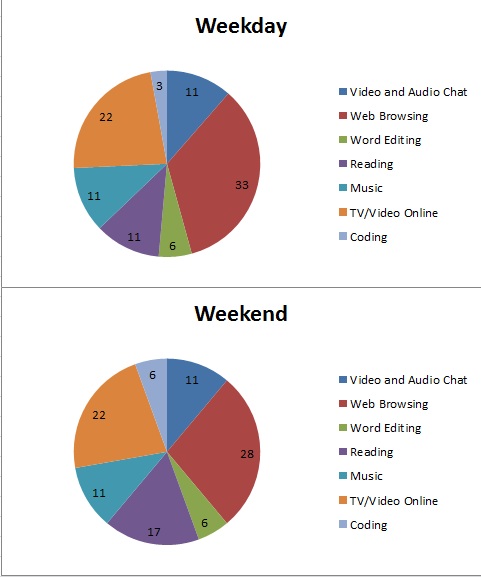
Here is how my time on these gadgets roughly gets distributed (number in percentages).

I did mention earlier that my intent was to try and replace my laptop through a combination of iPad and desktop. However in the past two years, I haven’t been very successful at it, one of the primary reasons being the difference in typing speeds on a regular keyboard and a virtual one. I could potentially buy a keyboard that can attach to my iPad but then that defeats the purpose of a tablet. Add on the fact that most of what I do on a tablet can be done on a smartphone as well, with the obvious disadvantage of a smaller screen, the case for a new tablet become even less convincing.

Having said that, I’m sure by now you all know that I do have a bias towards Apple products which means my potential budget for a laptop is slightly on the higher side as well. So it’s a choice between a $399, iPad “mini” and a $999 MacBook Air.

Let me know what you guys think. I’m also interested in hearing what you use on on a daily basis. And so I’ve started a survey to hear your thoughts. There are no free iPads being given away, but I promise you that it will not take more than 5 minutes of your time.
Wallaby solves one of those financial dilemmas!

If you are someone like me, I’m sure you must have faced a situation where you took out your wallet at a restaurant and started to gaze at all your credit cards wondering which one to choose in order to gain the maximum rewards. Well, now the answer to this problem is just a click away – Wallaby ! Currently launched just on the iPhone as a free app, wallaby lets you add you credit cards to scrape through their rewards and benefits every time you search for a location. Before you panic, I must say, it does not require you to give out your entire card number. All it needs it the first 6 digits of your card, which uniquely identifies the bank and their list of credit cards. You can then save the ones you own. What that means is, wallaby just mines the rewards programs from each of those cards, which usually stays the same across any user. So the next time you go to a restaurant, all you have to do is to just launch the app and it will tell you based on your location, which one of those cards to pick to pay. Quite a novel idea!

Coached by the mentors at Mucker Lab , the app was launched two days ago at the iTunes Store . While the whole array of credit cards that it presents to you is huge, there is still quite a few missing. For now, it gives you an option to send a message stating the details of the missing card. I’m sure as the user base grows, the database of credit cards will slowly move towards being exhaustive.